KONOHANA SAKUYA ISU
Konohanasakuya-Isu
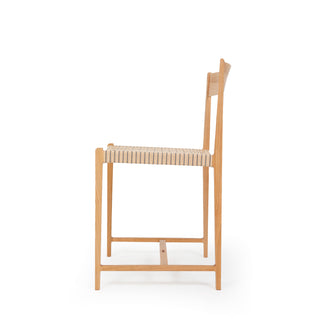
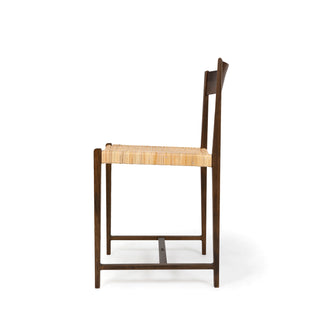
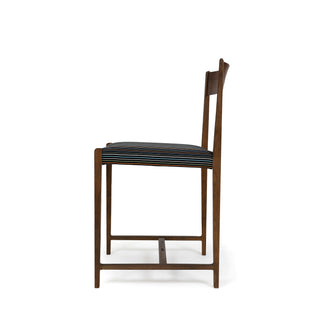
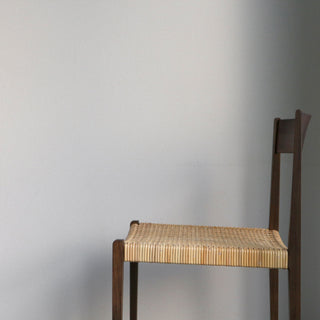
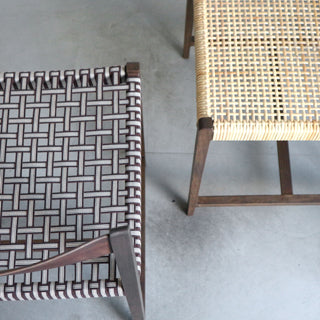
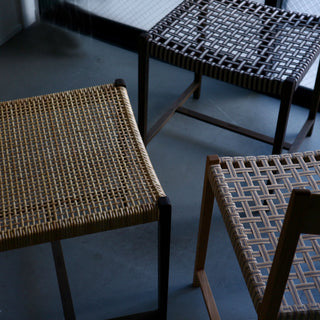
Inspired by sukiya-zukuri, the refined architectural style seen in traditional Japanese buildings such as the Katsura Imperial Villa and the Myōki-an teahouse, this chair expresses quiet elegance through natural materials and a minimalist design. We carefully crafted it to evoke grace and delicacy, following the Japanese sense of beauty rooted in simplicity. The frame is made of Japanese wild cherry (Yamazakura), a native hardwood known for its smooth texture, moderate hardness, and gentle flexibility. The structure has been engineered so that each part is thinned down as far as possible without compromising the chair’s strength or function—making the structure itself a part of the design. As a result, we achieved one of the lightest chairs in the world at just 1.7 kg .
Born from the Earth, Returning to the Earth
Gifts from the land live alongside people, and then they return to it.
Culture is nurtured within the climate and grows forward to the next generation.
This, we believe, is the natural way.
Yamazakura
A tree species unique to Japan, existing since ancient times. Its name "Sakura" comes from the beautiful princess of Japanese mythology, Konohanasakuya-hime, who symbolizes this graceful tree.
Linseed Oil
Extracted from flax seeds, linseed oil offers anti-fungal, preservative, and water-resistant properties. When applied to wood, it helps regulate air humidity and purify the surrounding environment.
Latex Foam
A cushioning material made by foaming natural rubber. With its antibacterial and durable qualities, latex foam is increasingly being used as a medical material to replace conventional petroleum-based foams.
Sanada-himo
A flat woven cord made from silk or cotton, tightly compressed both vertically and horizontally. Historically used for reinforcing samurai armor, swords, and other daily tools, its strength and durability have been valued for centuries.
Rattan
A flat material made from the outer layer of rattan. Its use dates back over 1,000 years, originally in weaponry and tea utensils, and more recently as a material for woven chair seats.
Kokura-ori
A traditional textile from the Kokura domain, tightly woven from high-quality cotton threads. Known for its durability and vibrant patterns, it was favored by samurai for making hakama (formal pleated skirts) and obi (sashes) due to its robustness and aesthetic qualities.
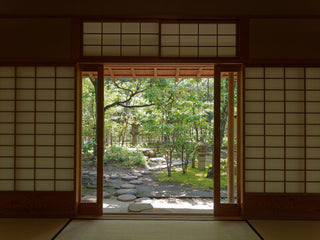
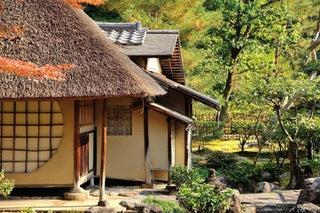
Sukiya-Zukuri
An architectural style unique to Japan, developed about 600 years ago. It emphasizes simplicity and refinement, making full use of the natural texture and beauty of materials.
This style reflects the Japanese aesthetic of creating calm, meditative spaces within the home. Originally, sukiya buildings were designed for enjoying traditional cultural arts such as tea ceremony, poetry, and flower arrangement.